☕ TL;DR
- VR for Cephalopods: Scientists put 3D glasses on cuttlefish to test their memory. yes, really.
- Episodic Memory Confirmed: Turns out, these tentacled creatures remember “what, where, and when” just like us.
- Why It Matters: This could unlock new treatments for memory disorders like Alzheimer’s.
The Scoop: Breaking the Invertebrate Barrier 🔨
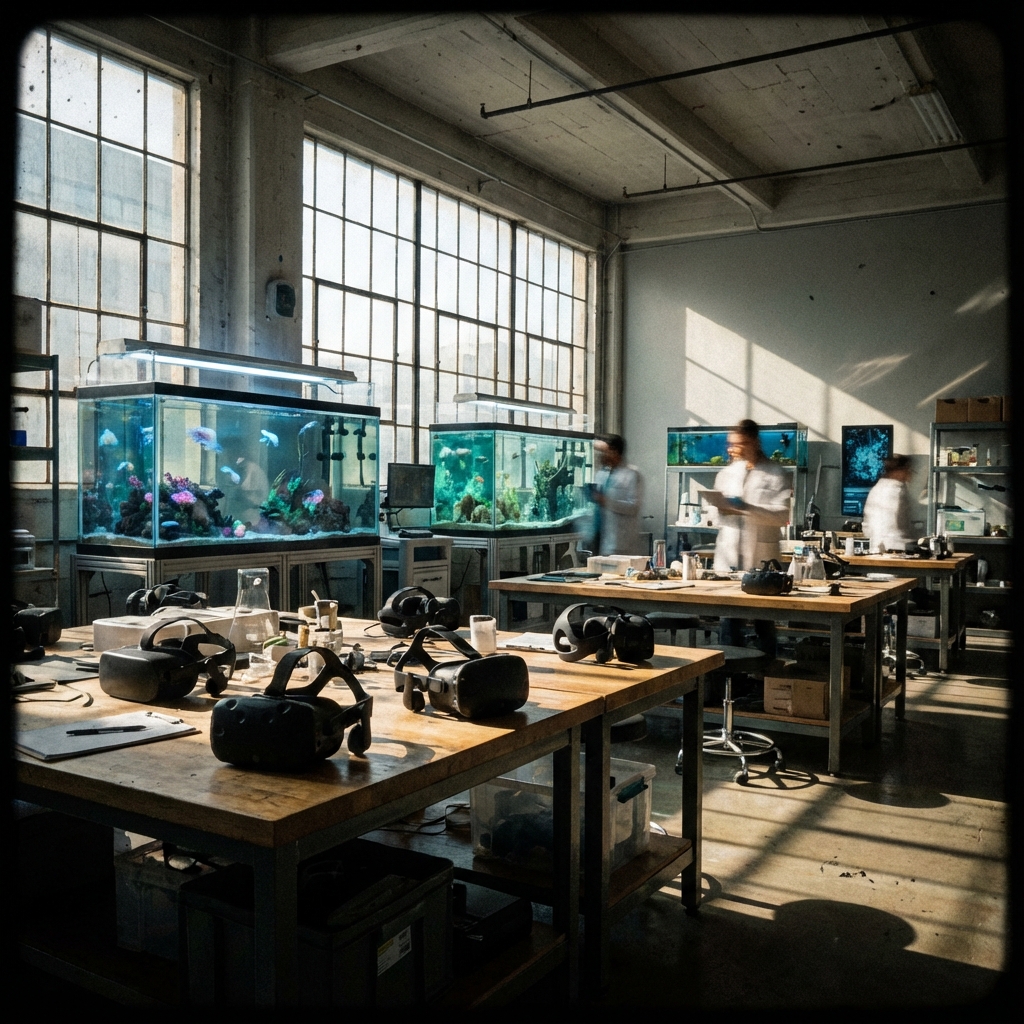
Imagine walking into a lab and seeing a cuttlefish wearing 3D glasses. No, it’s not the world’s weirdest cinema; it’s the Marine Biological Laboratory (MBL) redefining neuroscience. Researchers used Virtual Reality (VR) to create immersive hunting grounds for cuttlefish and utilized Artificial Intelligence (AI) to track their every move. The goal? To see if these creatures possess episodic memory—the ability to recall specific events. And spoiler alert: they do.
Why It Matters: The “Memory Code” 🧬
For a long time, we thought detailed memories were a human thing (or at least a mammal thing).
- The Discovery: Cuttlefish can optimize their foraging based on past events, remembering exactly what food was available, where it was, and how long ago.
- The Tech: Using AI, specifically DeepLabCut, scientists analyzed massive amounts of behavioral data that would be impossible to track manually.

The Big Picture: From Ocean to Clinic 🏥
This isn’t just about smart squids. It’s about us. By understanding how a completely different brain architecture handles memory, scientists gain a comparative model to study human memory deterioration. This research offers a new lens for tackling neurological diseases like Alzheimer’s, potentially accelerating drug discovery and therapeutic strategies.
Ready to Dive Deep?
The convergence of AI, VR, and Biology is opening doors we didn’t even know existed. Who knew our brain’s best secrets might be hiding in an aquarium?