☕ TL;DR
- Record Breaker: Korean instant noodle exports hit $1.52B in 2025, up 22% YoY 📈
- Premium Pricing: Overseas ASP is 30-50% higher in Asia, 2x in the US 💵
- Market Share Play: Samyang projected to double US market share to 23.9% by 2028 🎯
A Billion-Dollar Bowl: The Numbers Behind the Surge
Korean instant noodle exports reached $1.52 billion in 2025, surging 22% year-over-year. This marks the first time a single food category has crossed the $1 billion threshold in overseas sales.
According to the Ministry of Agriculture, Food and Rural Affairs, total “K-Food+” exports—encompassing food products and agricultural industries—hit a record $13.62 billion, up 5.1% from the prior year. This represents the tenth consecutive year of growth.
While sauces, ice cream, and fruit exports also gained traction, instant noodles (ramyeon) were the standout performer. New products like cheese-flavored spicy noodles resonated with consumers in China, the US, and emerging markets in Central Asia and the Middle East.
“Global demand for Korean noodles continues to expand, and companies have scaled up production and stabilized supply chains to meet it,” the ministry noted in a late-2025 report.
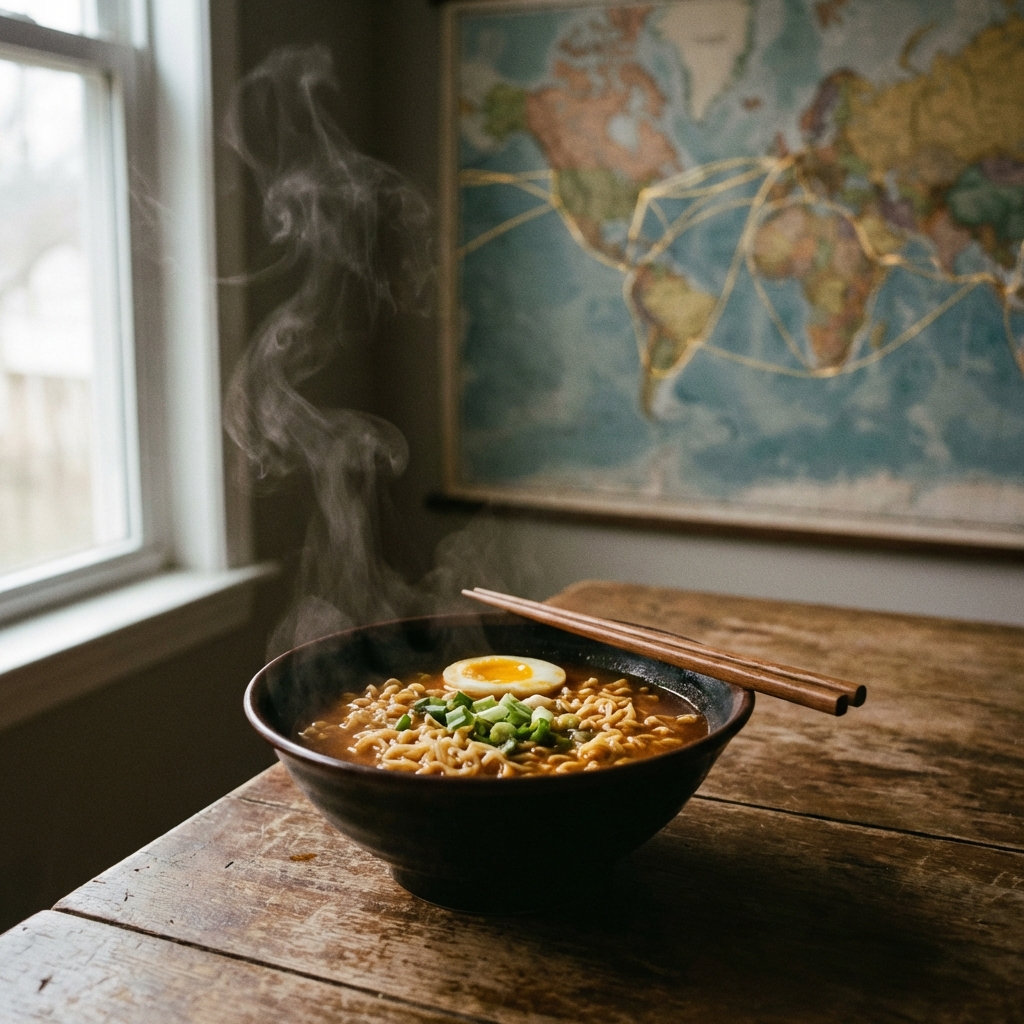
The data is clear: Korean instant noodles are no longer a niche product. They’re a global staple.
Why Korean Noodle Makers Are Looking Abroad
The domestic market is saturated. Nongshim, best known for its Shin Ramyeon brand, holds over 60% market share in South Korea, according to Oh Jiwoo, analyst at CGS International.
“Their main product was first invented in the 1970s and 80s. And those products, the same products, are selling every year with no marketing cost,” Oh said.
Shin Ramyeon, launched in 1986, has dominated the Korean market for nearly four decades. But that dominance comes with a ceiling: there’s little room left to grow domestically.
South Korea’s demographic decline further limits long-term growth. Oh added that structural population issues are pushing companies to prioritize overseas expansion.
Pricing power is another constraint. According to a Macquarie report, Korean instant noodle manufacturers face government-imposed limits on price increases, restricting their ability to offset rising costs.
This trifecta—market saturation, demographic headwinds, and pricing restrictions—has forced Nongshim, Samyang, and Ottogi to pivot aggressively toward global markets.
Nongshim CEO Cho Yong-chul told employees at the start of 2026 that the company’s business principle for the year was “Global Agility & Growth.” Ottogi CEO Hwang Sung-man said at a March 2025 shareholder meeting that the company would prioritize “exploring global markets” and aim for overseas sales revenue of 1.1 trillion won ($746 million) by 2030.
The message is clear: growth is overseas, or nowhere.
K-Pop Sells Noodles: The Cultural Multiplier
Culture is the secret ingredient.
The massive appeal of K-pop and Korean television dramas has fueled demand for Korean food. Characters are often shown eating ramyeon in dramas, variety shows, and advertisements, creating organic product placement that resonates with global audiences.
Just as K-pop companies are looking overseas for growth, Korean food makers are doing the same, Oh noted.
Nongshim named SM Entertainment girl group Aespa as global ambassadors in late 2025, following a collaboration with Netflix on a K-pop Demon Hunters-themed noodle line. Ottogi tapped BTS member Jin as its brand model for Jin Ramen—a clever play on the product name.
This isn’t just marketing. It’s cultural arbitrage. Korean noodles are no longer just food; they’re part of the K-culture package that global consumers are eager to buy into.
The halo effect is real. When fans watch their favorite K-pop idols or K-drama characters eating ramyeon, they want to experience the same thing. And they’re willing to pay a premium for it.
The Premium Play: Why Overseas ASP Is 2x Domestic
The biggest draw of overseas markets? Higher average selling prices (ASP).
According to CGS International’s Oh, average prices in China and other Asian markets are 30-50% higher than in South Korea. In the US, they’re roughly double.
A pack of noodles that sells for $1 in Korea can fetch $2 in the US. This isn’t just shipping costs or tariffs. It’s brand positioning.
Macquarie noted that dominant Japanese and Korean brands have benefited from shifting consumption patterns due to their focus on “product innovation and cultivating a premium brand image.”
Inflation has also played a role. According to a November 2024 Macquarie report, inflation has expanded the US noodle market as consumers seek affordable, convenient meals.
US inflation for “food away from home” breached a 13-year high of 5.3% in 2021 and peaked at 8.8% in March 2023, according to the US Bureau of Labor Statistics. Although it has tapered to 4.1%, it remains elevated.
Oh explained: “Eating out in the US and Europe is very expensive. Consumers want to save more, then they try ramyeon—it’s great and it’s cheap.”
Korean instant noodles occupy a unique niche: affordable premium. They’re cheap enough to be a value play, but premium enough to command higher margins.
Samyang’s US Conquest: The 23.9% Target
Samyang Foods is the standout case.
Macquarie projects Samyang will increase its US market share to 23.9% by 2028, up from the current 11.4%. That’s more than doubling in three years.
“We believe premium instant noodles with strong product innovation will be the key driver for the US market,” Macquarie said.
Samyang’s Buldak line of spicy instant noodles gained global popularity in 2014 with the “fire noodle challenge,” in which participants tried to eat the noodles without drinking water. The trend went viral on YouTube and social media, catapulting the brand to international fame.
The trend even led to regulatory scrutiny in 2024 when Danish authorities briefly recalled some Buldak products over high capsaicin levels, citing serious health risks. The recall was later reversed, and if anything, the controversy boosted brand awareness.
Samyang’s success hinges on product innovation. The Buldak line has expanded beyond spicy to include cheese, carbonara, and cream flavors, broadening consumer appeal.
If Samyang hits its 23.9% target, it will be a case study in how to scale a premium food brand in a competitive market.
The Investor Angle: Is This a Buy?
From an investment perspective, Korean noodle makers offer a compelling growth story.
Bullish Factors:
- Sustained global demand: K-culture tailwinds and inflation-driven value seeking
- Premium pricing power: Higher margins in overseas markets
- Product innovation: Track record of successful new product launches
Risk Factors:
- FX volatility: A stronger won could erode export competitiveness
- Local competition: US and Chinese brands may fight back
- Regulatory risk: Food safety regulations could tighten (see Denmark recall)
If Samyang delivers on Macquarie’s projections, it could see significant upside. Nongshim and Ottogi have also set clear global expansion targets, positioning them for multi-year growth.
That said, near-term volatility from FX and commodity prices is likely. A diversified, long-term approach is warranted.
The Next Chapter for K-Food
The $1.5 billion milestone is just the beginning.
According to the Ministry of Agriculture, sauces, ice cream, and fruit are also growing rapidly. The “culture + food” synergy that ramyeon has proven can be replicated across other categories.
Nongshim, Samyang, and Ottogi aren’t just noodle companies. They’re K-culture ambassadors building global premium brands.
Ottogi’s 2030 overseas revenue target is $746 million. Samyang’s US market share target is 23.9%. If these goals are met, K-Food will join K-pop and K-dramas as another global success story.
One bowl at a time, Korean noodles are conquering the world.
Disclaimer: This content is for informational purposes only and does not constitute investment advice. Investment decisions should be made based on your own judgment and responsibility.