☕ TL;DR
- The Signal: President Trump labeled the UK’s pivot toward China “very dangerous,” signaling a zero-tolerance policy for decoupled trade strategies among allies.
- The Precedent: Canada’s 100% tariff threat serves as the “sword of Damocles” for any ally attempting to mend ties with Beijing.
- The Verdict: The “Middle Ground” is evaporating. Expect increased volatility in multinational firms with high China exposure as geopolitical risk premiums rise.
The Scoop: Strategic Partnerships Under Fire 🔨
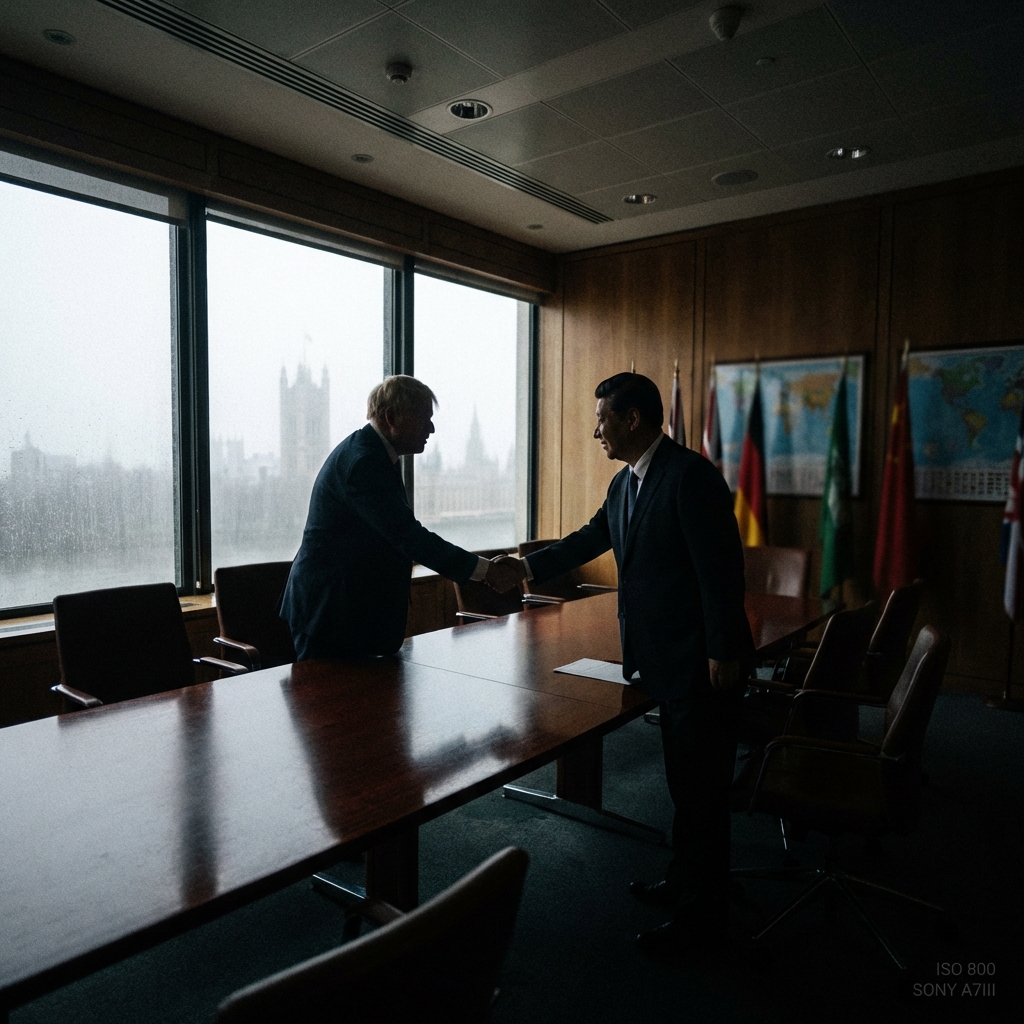
It’s no longer hidden in diplomatic cables. President Donald Trump has publicly warned the U.K. that doing business with China is “very dangerous.” This comment comes exactly as Prime Minister Keir Starmer attempts to execute a “long-term strategic partnership” with Beijing—the first such prime ministerial visit in eight years.
While Starmer brought a delegation of 60 executives to secure deals like AstraZeneca’s $15 billion investment, the White House is viewing these moves through a binary lens. In Trump’s world, a win for Beijing’s trade balance is a loss for U.S. national security.
The Canadian Warning: 100% Tariffs are Real 💥
If anyone thought Trump was bluffing, they only need to look North. Canada’s Mark Carney recently signed a trade roadmap with China, including a managed entry for 49,000 Chinese EVs at a preferential 6.1% tariff. Trump’s response was immediate and visceral: a threat of 100% tariffs on all Canadian goods.
Trump’s commentary on Canada—mocking their dependence on China and even bringing up ice hockey—underscores a shift from traditional protectionism to “Aggressive Realism.” He is using the U.S. market access as a weapon to enforce a unified allied front against China.
Market Analysis: The Cost of the “Golden Era” 2.0 📈
The UK secured a 50% cut in whisky tariffs and visa-free travel. AstraZeneca is doubling down on Chinese manufacturing. On paper, these are “alpha” generating moves for British earners.
However, the “Trump Risk” creates a significant discount:
- Supply Chain Recalibration: Firms like AstraZeneca now face a “dual-hub” requirement. If the U.S. imposes secondary sanctions or reciprocal tariffs on UK goods because of “China-tainted” investments, the ROI on these deals collapses.
- The Sterling Volatility: Geopolitical friction with the U.S. traditionally weakens the GBP relative to the USD, potentially offsetting the gains from Chinese trade.
The Big Picture: No More Hedging 🎢
For global investors, the verdict is clear. The era of “Economic trade with China, Military alliance with the U.S.” is officially dead.
Trump’s recent moves suggest that the U.S. is willing to inflict significant economic pain on its closest allies to ensure decoupling from China. South Korea, Japan, and the EU are next in line.
My positioning: We are moving toward a bipolar trade world. I am underweighting “Bridge Economies” that attempt to balance both superpowers without a clear U.S.-first mandate. The risk of 100% “retribution” tariffs is now a non-zero probability in every analyst’s model.
Disclaimer: This content is for informational purposes only and does not constitute financial advice. All investment decisions should be made based on your own judgment and responsibility.